 |
 |
 |
 |
 |
 |
 |
 |
 |
 |
 |
 |
Premiership - Highbury - 38,127
Scorers: Kewell (5), Harte (48), Viduka (88)
Arsenal: Seaman; Touré (Kanu 70), Luzhny, Keown, Cole; Wiltord (Pennant 76), Parlour, Gilberto, Pires (van Bronckhorst 80); Bergkamp, Henry
Leeds United: Robinson; Mills, Radebe, Duberry, Harte; Kelly, Bakke, Matteo, Wilcox; Kewell (Simon Johnson 80), Viduka
The Charlton triumph had been followed by an ill deserved 2-2
draw at home to Tottenham, while only two goals in the final ten
minutes at Southampton had given the slightest semblance of competitiveness
to a drab 3-2 defeat. Mark Viduka's two goals had eased fears
of the drop by inspiring a strong showing to beat Fulham, but
then Leeds had squandered Viduka's 21st minute lead at home to
Blackburn to slump to another depressing defeat. Coupled with
Bolton's battling draw with Arsenal and West Ham's spirited victory
at Manchester City, the result left United in 16th spot, just
one point above Wanderers and three above the Hammers. The final
relegation spot rested between the three teams with two games
left. The form of both Bolton and West Ham had been good in recent weeks, and
the first of Leeds' two remaining games was a daunting one, away to champions
and Premiership contenders Arsenal, so confidence around Elland Road was
low in those grim days. The game was set for Sunday, 4 May, with Bolton and West Ham having the
opportunity to turn the screw in their Saturday fixtures. The Hammers were first off, facing a strong Chelsea side at Upton Park,
and the match was fiercely contested with the Blues playing for a place
in the Champions League. West Ham had much of the play, however, and secured
the points with a late goal from Paulo Di Canio, to move ahead of Bolton
and level on points with Leeds, although with by far the worst goal difference
of the three sides. Bolton were away to FA Cup finalists Southampton for a kick off in the
late afternoon and settled for a goalless stalemate which left them on
41 points, the same as their rivals and splitting them on goal difference. The stage was now set for the ultimate test for Leeds United, and the
Sunday papers flowed over with dark premonitions. Joe Lovejoy of The Sunday Times: 'Behind the scenes, the money
men who had piled up debts of £79m and losses of £3m a month were heading
for the hills, clutching their fat payoff cheques. Ridsdale went with
£383,000 - 12 months' salary as severance payment - followed by Stephen
Harrison, the chief operating officer, with £234,000. Leeds are now in
the hands of non-football people, which is probably a good thing, if Ridsdale
was the archetypal fan let loose in the boardroom. 'The consequences of relegation would make administration inevitable
for a company already looking to raise a further £15m from the transfer
market, and told to make savings of £5m a year. The loss of television
money would be ruinous. Figures recently 'Some will be moving on in the summer, come what may. How did Reid feel
about more stars leaving? Sanguine, apparently. "They're no use to
us if they don't want to be here," he said. "There's no point
worrying about it, I'm just delighted to be in work. It's a great football
club that's had a nasty reality check. There's a need to rebuild, and
I'd like to be part of that. I was brought in to do a specific job, and
I've got to do that first. Things will take a lot of turning around, but
I'm capable of that."' David Bond of The Sunday Times: 'Saving Leeds from meltdown in
the Premiership is proving difficult enough for directors at Elland Road.
Trying to do it on the meagre sums available to clubs operating in the
First Division would be impossible. While senior club sources talk privately
about the contingency plans for each scenario, relegation is simply not
an option. 'One insider predicted that relegation would be a "disaster".
Parachute payments of £5m a year help to cushion the blow of relegation
for Premiership sides going down. But the drop in income is still thought
to be between £15m and £20m, caused mainly by the loss of revenue from
the Premiership's contract with BSkyB. 'The first job for the administrators would be to sell the club's stars.
Australia international Harry Kewell, who would have brought £18m two
years ago, is now worth little more than £5m. Paul Robinson, Mark Viduka,
Danny Mills, Olivier Dacourt and Alan Smith would all command decent fees
despite the downturn. But the administrators would be forced to let other
members of the squad go for free or next to nothing just to reduce the
£50m wage bill. 'Professor John McKenzie has already cut £5m of costs in addition to
the £8m of savings 'It wasn't only players' wages that were proving excessive. McKenzie
has discovered a number of examples of largesse, including the fact that
75 employees had company cars. Not only must the club try to stem the
flow of money, it must also raise new investment. Leeds are in talks with
interested parties, but with a depressed share price of 3.5p, their options
are limited. Restructuring the club's £79m debts would be aided by the
legal protection that administration offers companies from their non-footballing
creditors. The biggest chunk of that debt, a £60m syndication loan arranged
in 2001, is spread over 23 years and costs the club £4m a year in interest.
From 2004 however, Leeds must start paying back the capital, taking the
repayments to £7m a year. 'The best option for Leeds, then, might be to follow the example of Leicester,
who have just emerged from administration. They negotiated a deal with
the bank that lent them £28m to build the Walkers stadium, giving the
lender the ground in return for the right to lease it back over 25 years.
The biggest problem would be how to pay debts to players and coaching
staff who must be repaid in full. In addition, the Football League is
considering tough penalties, including points deductions, for clubs that
go into administration to gain an unfair commercial advantage. That would
make Leeds' task of returning to the Premiership even harder. 'A win at Arsenal today really is a win at all costs.' A draw would have been of little use to Leeds, but unsurprisingly Peter
Reid sought to make his side difficult to beat by opting for a 4-4-1-1
formation with Mark Viduka asked to operate on his own up front, and Harry
Kewell working from the left flank. Alan Smith was out through suspension,
following his dismissal at Southampton. Lucas Radebe was his replacement,
slotting in alongside Michael Duberry at the heart of defence, allowing
Dominic Matteo to operate in midfield with Gary Kelly, Eirik Bakke and
Jason Wilcox. Arsenal had been suffering their own stutter in the Premiership of recent
weeks, and their weakened side, missing Lauren and Sol Campbell at the
back and Patrick Vieira in their engine room, started apprehensively,
although Leeds were less generous with their first chance when Wilcox launched
a huge punt upfield towards Kewell on the left hand side in the fifth
minute. The veteran pairing of Oleg Luzhny and Martin Keown simply could
not get close to stopping the Australian as he collected the ball and
without breaking stride lashed home a glorious left footed curler from
fully 25 yards which David Seaman never came close to seeing, let alone
saving. Arsenal were stunned and their makeshift defence continued to rock with
deputy right back Kolo Toure struggling to stay in position and the elderly
centre backs pulled all over the place by clever forward play. Kewell came close six minutes later after Viduka had held the ball up
long enough to play him in on the right. He rounded Seaman but went too
wide and was unable to pull his shot back far enough, firing instead into
the side of the net. It was not the only time that Seaman was left with
little protection in front of him, as Viduka threatened twice. Wilcox
helped Kelly's cross on but Seaman gathered the Aussie's flick, while
the striker later headed wide from a perfect free kick from Ian Harte. It was not all United, however, and on the 15 minute mark Paul Robinson
made a great save when Duberry deflected Henry's shot, before Mills cleared
the loose ball, preventing Sylvain Wiltord from capitalising on it. Arsenal were starting to click into gear now, inspired by a dynamic Ray
Parlour performance. After 30 minutes the midfielder fired in a shot from
outside the area which reared up on the bounce, forcing Robinson into
a finger tip save onto the bar. As it dropped back into play, Henry was
in the right place at the right home to head home the equaliser. The goal came at the right time for the Gunners, encouraging them to
greater effort with bags of time before the interval to make it pay off. Parlour had another long range effort which Duberry blocked on the line
with Robinson beaten. Then Wiltord thought he had given Arsenal the lead
after he followed in to force home the ball when Henry hit the post, but
an offside flag told him otherwise. Just before half time, Bakke gave
away a free kick 25 yards from goal after blocking off Henry but Robinson
collected well behind his wall. It had been a testing period, but the pairing of Radebe and Duberry had
stood up well, and Matteo had provided a sound barrier in front of them,
absorbing much of Arsenal's increasingly frenetic approach play. The interval came at just the right time for Leeds, breaking up the rhythm
that the Gunners had started to create, and United struck even more quickly
in the second half than they had the first. With just three minutes gone Ashley Cole was adjudged to have committed
a foul on Leeds' right wing and Ian Harte stepped up to take the free
kick from 20 yards out. He had scored for two years running in this fixture
with his hallmark free kicks, but Arsenal were either not concentrating,
or judged that the ball was too far out, for their wall contained just
two men. Minutes later, Harte was at it again, but this time his dead ball effort
beat the top corner. But once more Arsenal managed to work themselves up to regain the initiative
despite their stretched resources, finally managing to get somewhere near
their unstoppable form of the autumn. They had Leeds on the ropes for
long stretches, but somehow United's phenomenal rearguard action managed
to withstand one of the most dangerous attacking forces in Europe. Nevertheless, the Gunners did manage to fashion a second equaliser just
after the hour. Wiltord was guilty of squandering a free header at the
far post, but then the Arsenal attacking machine clicked smoothly into
action. Henry freed Pires on the left and he drove straight towards the
penalty area, before turning inside away from Danny Mills, and cutting
it back into the middle for Dennis Bergkamp to thrash eagerly into the
roof of the net from close in. A minute later the Dutchman went into the referee's notebook for a dangerous
challenge on Ian Harte as Arsenal sought to up the tempo. Bergkamp nearly
added a second shortly afterwards when his bending effort drifted wide,
and then Henry struck the foot of the post. Leeds were on the ropes and
increasingly stretched, with Kanu coming on for Toure and adding to the
mayhem, but the Gunners were becoming more and more panic stricken as
they saw their Premiership chances drifting away from them. Kewell, in fact, came close to restoring the lead for the Yorkshiremen
15 minutes from time, but Seaman touched away his drive left handed. It
was the Australian's final contribution of any note, and after 80 minutes
Peter Reid brought on young Simon Johnson as replacement. The striker
soon took a leaf out of Alan Smith's book by using his physical presence
to unsettle the Arsenal defenders. They were so disturbed in fact that they allowed Viduka to Bergkamp was forced back into midfield where he was less effective and
young Jermaine Pennant was starved of the ball when he was introduced
wide on the right. Consequently he was over eager to show what he could
do when he did get possession and after 88 minutes he lost the ball when
trying to take on the Leeds defence single handed. Matteo seized on the
opportunity to set Leeds quickly onto a raking counter attack with a long
ball to Viduka on the right flank. It looked ominously like offside, but the Aussie did not wait for the
whistle and killed the ball instinctively. His clever drag back through
his own legs wrongfooted the static Luzhny completely and gave him space
to advance into the area, before he steadied himself with amazing composure
and swerved the ball unerringly with his left foot round Seaman and into
the far corner for a quite splendid winning goal. The Leeds bench and supporters went wild with jubilation at the sight,
scenes which were repeated in Manchester as Old Trafford fans celebrated
their own consequent Premiership triumph as Arsenal surrendered their
crown. Wenger turned and disappeared from view down the players' tunnel, while
Reid stayed to bask in the glory of knowing his side were safe and he
was almost certain to be given the manager's job on a long term basis.
He brought a sense of perspective when he entered the dressing room, commenting
'I don't want to temper the celebrations, lads, because you were great
today, but really when you look at the quality here you should never be
in this position.' He was rather more upbeat later, however: 'It is a great football club.
It has still got great support, anyone at Highbury who has seen the reaction
tells you this place is itching to get back into the big time and it is
my job to do that. Skipper Dominic Matteo was just glad it was all over: 'I thought the
lads battled unbelievably today, we knew how important it was for the
club. Everyone from the goalie to ... well everyone just got together
and put in a fantastic performance. It's been a really difficult season,
but we have got a lot of good players in the squad but not done ourselves
justice. We've shown today what we can do and now we need to achieve that
next season. Our home form has really been the problem, away from home
we've been as good as anyone, so if we sort our home form out we'll be
OK.' Five days later Peter Reid was repaid for achieving what had seemed an
impossible task when he had arrived by being offered a rolling 12-month
incentive-based contract worth a basic £500,000 a year. He commented:
'Obviously I was brought in to do a specific job and thankfully that was
achieved. Fortunately for myself I have managed to get the job on a permanent
basis. When you are manager of a club like Leeds, with its traditions,
you know what the bottom line is; you have to win football matches. It
is a good challenge and one I am looking forward to. It's the beginning
and, when you look at the table, we have to improve. The hard work starts
with the summer and you have got to get back to basics; being a hard side
to beat.' They had certainly been that at Highbury in the most memorable of circumstances.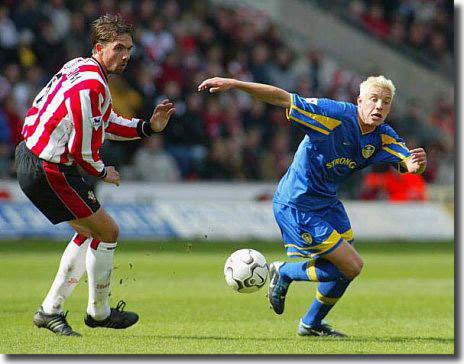 Despite
a stunning 6-1 win at Charlton Athletic
in only his second game in temporary charge, Leeds United were
still giving caretaker manager Peter Reid sleepless nights in
May 2003 with their haphazard and inconsistent displays leaving
them teetering on the very edge of relegation, a fate which could
have called the future of the entire club into question.
Despite
a stunning 6-1 win at Charlton Athletic
in only his second game in temporary charge, Leeds United were
still giving caretaker manager Peter Reid sleepless nights in
May 2003 with their haphazard and inconsistent displays leaving
them teetering on the very edge of relegation, a fate which could
have called the future of the entire club into question. released
by the Premier League show that in the 2001-2 season, Leeds received TV
fees totalling £22.5m. Manchester City, who had been relegated, got only
£3.95m as a First Division club. Such a shortfall would leave Leeds needing
to sell.
released
by the Premier League show that in the 2001-2 season, Leeds received TV
fees totalling £22.5m. Manchester City, who had been relegated, got only
£3.95m as a First Division club. Such a shortfall would leave Leeds needing
to sell.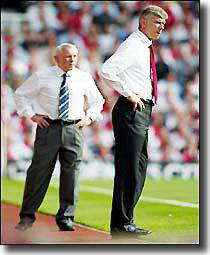 made after the sale of Jonathan Woodgate to Newcastle
for £9m and Robbie Fowler to Manchester City for £6m. Loan deals for Lee
Bowyer to West Ham and Olivier Dacourt to Roma also cut salary costs.
These will make Leeds' end-of-year financial results look a good deal
healthier than the half-year results announced in April, which revealed
a staggering pre-tax loss of £17.2m. During that period Leeds' operating
losses were £5.6m. That's £215,384 a week flowing out of the club.
made after the sale of Jonathan Woodgate to Newcastle
for £9m and Robbie Fowler to Manchester City for £6m. Loan deals for Lee
Bowyer to West Ham and Olivier Dacourt to Roma also cut salary costs.
These will make Leeds' end-of-year financial results look a good deal
healthier than the half-year results announced in April, which revealed
a staggering pre-tax loss of £17.2m. During that period Leeds' operating
losses were £5.6m. That's £215,384 a week flowing out of the club.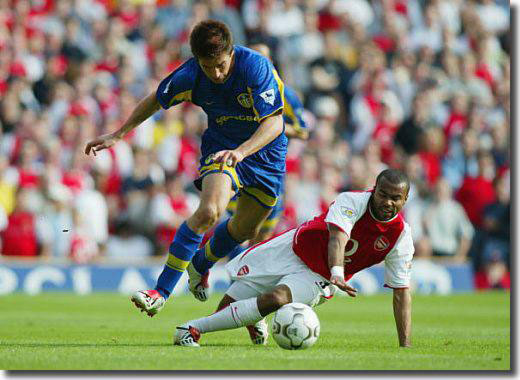 in the opening seconds Radebe had to be alert to deny Thierry Henry the
space for a shot on goal at the expense of a corner. Robert Pires took
it and Gilberto Silva was unlucky to see his header batter the United
crossbar and run clear.
in the opening seconds Radebe had to be alert to deny Thierry Henry the
space for a shot on goal at the expense of a corner. Robert Pires took
it and Gilberto Silva was unlucky to see his header batter the United
crossbar and run clear.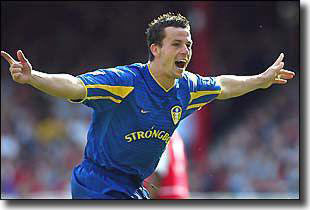 The Irishman needed no more bidding and looped over a great strike which
beat Seaman at his far post, although slight deflections off Gilberto
and Cole helped.
The Irishman needed no more bidding and looped over a great strike which
beat Seaman at his far post, although slight deflections off Gilberto
and Cole helped.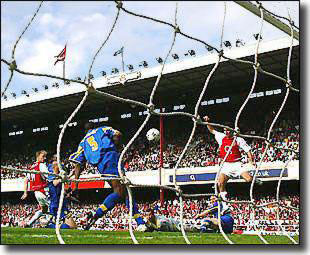 go unmarked in the area as Mills' long free kick came over but the header
was wide. And despite all the Londoners' frantic panic, they were looking
less and less likely to manage a winner, as Leeds seemed to be willing
to settle for a hard won draw. But Arsene Wenger's tinkering in search
of a breakthrough was ultimately his side's undoing.
go unmarked in the area as Mills' long free kick came over but the header
was wide. And despite all the Londoners' frantic panic, they were looking
less and less likely to manage a winner, as Leeds seemed to be willing
to settle for a hard won draw. But Arsene Wenger's tinkering in search
of a breakthrough was ultimately his side's undoing.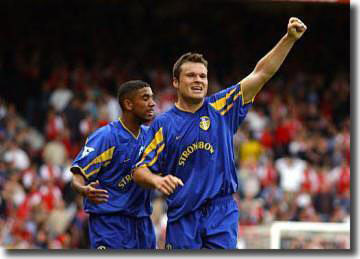 The
result at Highbury was terrific for the club, myself and the players.'
The
result at Highbury was terrific for the club, myself and the players.'