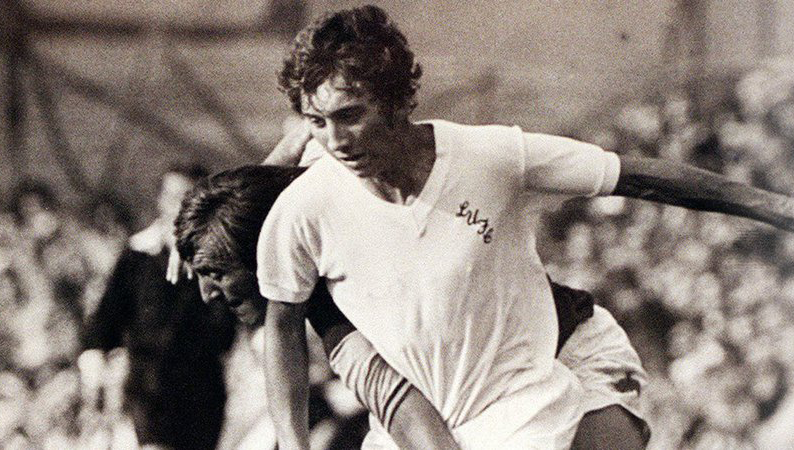
 James
Arthur Mann was born on 15 December 1952 in Goole, Yorkshire, and began
his footballing journey at a time when Leeds United were one of Europe’s
most dominant forces. Signed by Don Revie’s side as an apprentice in 1969
straight from school, Mann was monitored by the club from the age of 12
due to his standout performances for Yorkshire Schoolboys and inside-left
promise in county matches.
James
Arthur Mann was born on 15 December 1952 in Goole, Yorkshire, and began
his footballing journey at a time when Leeds United were one of Europe’s
most dominant forces. Signed by Don Revie’s side as an apprentice in 1969
straight from school, Mann was monitored by the club from the age of 12
due to his standout performances for Yorkshire Schoolboys and inside-left
promise in county matches.
He turned professional in December 1969 and entered a notoriously competitive
environment, training alongside legends like Billy Bremner, Johnny Giles,
Peter Lorimer, and Jack Charlton, at the very peak of the club’s ambitious
dominance.
During the 1971/72 season, Mann made his first foray into senior football.
He earned his debut on 27 September 1971 against Derby County at Elland
Road, coming on as a substitute for Bremner. Just two days later he earned
a start in a First Division fixture against West Ham, producing a disciplined
display in a goalless draw. A few weeks later he made his European debut
in the European Cup against Lierse — a start that ended in defeat but
underscored the level of trust the club placed in its youth at such critical
moments. He later featured once more in the European Cup Winners’ Cup
second round second leg in December 1973 versus Vitoria Setubal, which
became his final appearance for Leeds before a free-transfer exit in May
1974.
In total, while at Leeds United between 1969 and 1974, Jimmy Mann made
only two league appearances and never scored a goal for the senior side.
His limited involvement was symptomatic of the strength of the first team
— Leeds were competing deep in European Cup, domestic and cup competitions
during his tenure, and opportunities for breakthrough were rare. Despite
his obvious skill — he was occasionally used up front in the Central League
reserves and was known for shooting ability — he struggled to dislodge
a squad packed with international stars and ready substitutes for every
role. However, training within that elite environment and participating
even peripherally in European competitions provided Mann with invaluable
experience and grounding in professional standards.
Released in the summer of 1974, Mann transferred to Bristol City on a
free move in May. His departure marked the beginning of the next phase
of his professional life. At Bristol City, he blossomed into a key midfield
figure, playing primarily as an attacking midfielder. He was integral
to City’s promotion to the First Division under manager Alan Dicks in
the 1975–76 season, contributing goals, creativity, and vision to a squad
that punched above its weight.
Over eight seasons with Bristol City, Mann made 205 league starts and
26 substitute appearances, scoring 31 goals. One of his most memorable
contributions came in 1979, when he unleashed a spectacular 30-yard strike
against reigning European champions Nottingham Forest at Ashton Gate.
The goal, which beat England’s number one keeper Peter Shilton, became
legendary among City faithful — described by fans as 'ridiculous', 'screamer'
and fondly remembered as one of the greatest ever seen at Ashton Gate.
Despite this crest of success, Bristol City’s financial troubles in the
early 1980s culminated in the infamous 'Ashton Gate Eight' moment. Mann
was one of the players who voluntarily agreed to have his contract canceled
in 1982 to help save the club from bankruptcy — a gesture that illustrated
not only his professionalism but his loyalty to both club and team-mates.
His career journey continued with a brief move to Barnsley in February
1982, signed by Norman Hunter, another Leeds United alumnus. Mann made
fourteen league starts and one substitute appearance there, before short
stints at Scunthorpe United (two starts) and Doncaster Rovers (13 appearances)
later in 1983. He then returned to his roots in Goole, playing non-league
football with Goole Town and Bentley Victoria before retiring from the
professional ranks. After hanging up his boots, Jimmy Mann returned to
Goole and embarked on a variety of roles away from football — including
serving as a mobile security officer, a milkman for the Co-op, and ultimately
working as a jetty master at Goole Docks for Associated British Ports
from around 1994. His life after football reflected the same grounded
pragmatism and community connection evident throughout his career.
Reflecting on Mann’s Leeds United chapter, it’s clear that although his
first-team appearances were minimal, his early years shaped him profoundly.
He was schooled in a powerhouse of English and European football, absorbing
professionalism and tactical insight even from the sidelines. That Leeds
era — marked by league and cup finals, tough European competitions, and
elite team-mates — formed a foundation he would build upon during his
most productive years at Bristol City.